
The Trees Keep Returning
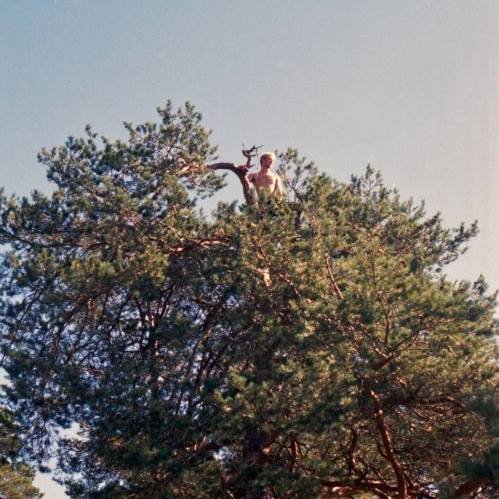
I remember early in my painting journey I wanted some direction as to what I should paint. I then had a dream in which my Mother came to me, we were walking along a path near my home and I asked pleadingly, “What shall I paint?” to which She let out a joyful laugh and pointed up to a nearby tree saying “Aren’t they beautiful?”. I woke up the next morning feeling quite light about the whole thing. To paint the things one enjoys, what more could one ask of life.
Trees as Marks
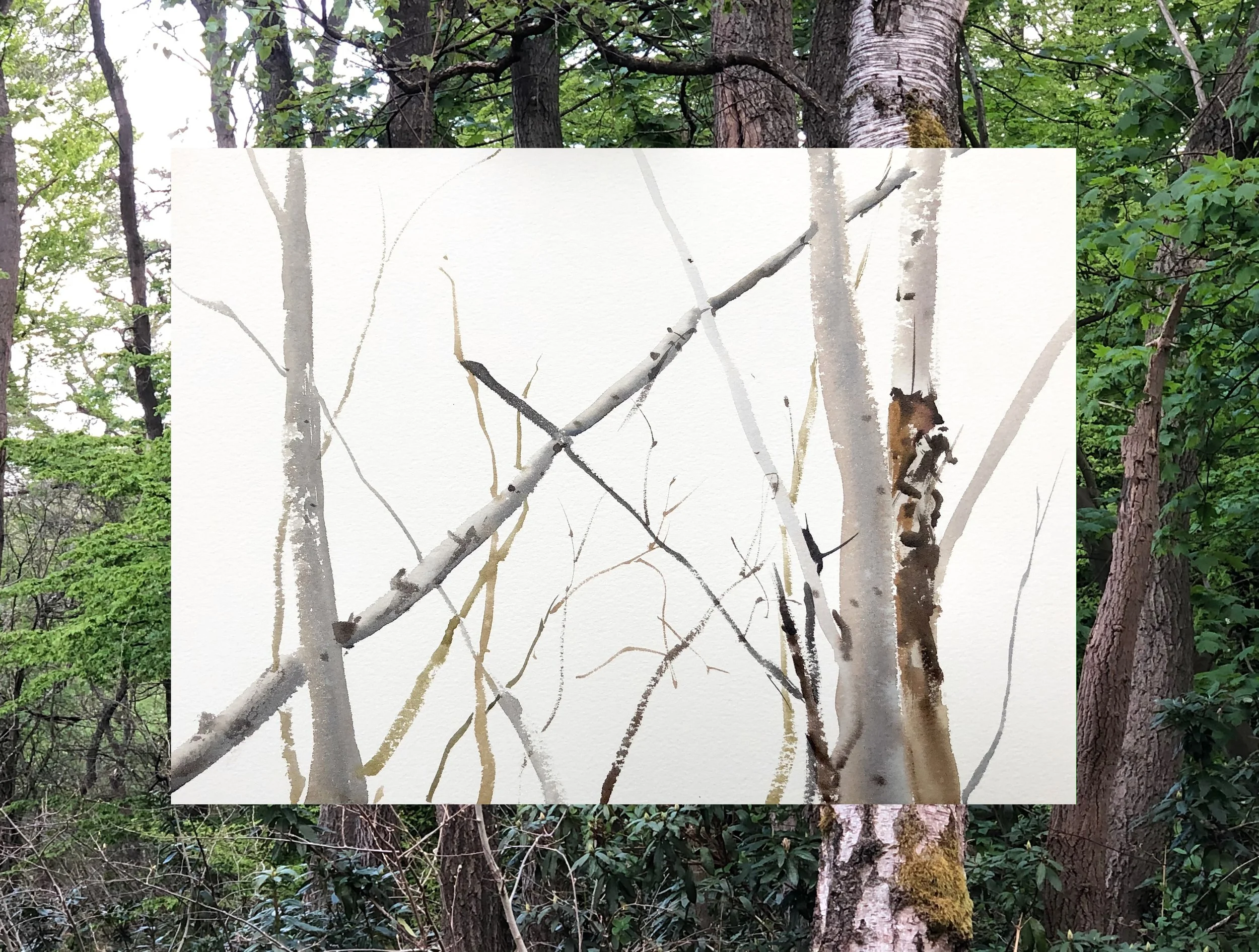
I first began obsessively painting outside. In the beginning I made the mistake of thinking that if I painted everything I saw, my painting would look good. Through trial and error I stumbled upon a more calligraphic approach, just painting what I was interested in. I realised that I could convey more with a single vertical brushstroke against the white of the paper than twenty marks trying to put everything in. The trees became marks, intervals of notes across the page. What began to matter was not only the marks themselves but the spaces between them. Like music, the silence became as important as the sound. A musician once said something that stayed with me: the notes are easy to place one after the other. What's harder is the space between them. It’s this space that gives meaning to the notes. This can also be likened to my practice of meditation. Sometimes, sitting in the early morning before painting, I notice a gap opening between one thought and the next. It's brief, but in it there's a quality of stillness that feels more real than the thoughts on either side. This feeling of silence helps me a lot while I paint. Sometimes, sitting before a scene, thoughts about composition, colour and tone start crossing my mind. Only when these subside — when I can watch without thought or idea — do I feel able to translate what's there, unfiltered, onto the paper.
Trees as Symbols
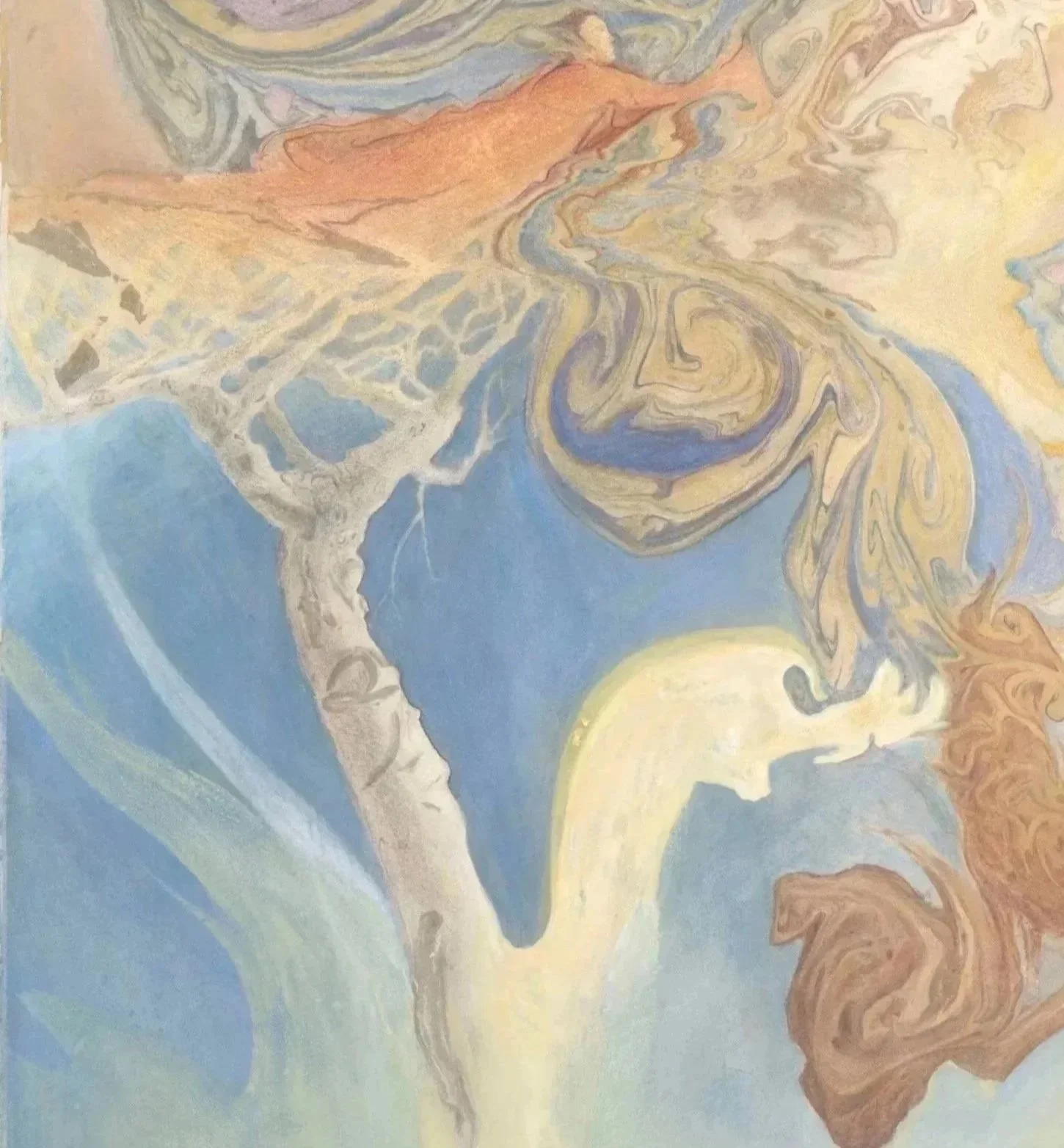
I also became fascinated by Russian folklore and pre-Christian pagan traditions. In some of these traditions, the pine was associated with the masculine principle and the birch with the feminine. Looking at pine trees I started to see how the branches leave the main trunk mostly in a straight 90-degree angles, similar to the broad shoulders of a man. Watching a birch I was struck by its pale complexion, its slender and curved form felt more similar to the feminine body as well. In Christian folklore the birch became a symbol of the Virgin Mary, the pagans and older traditions associated it with spiritual protection, a tree that could ward off bad spirits. In this painting you can see the figure lifted towards the divine from the bough of a birch. This idea came about from pagan rituals, where a sage would climb a pine tree as a way of drawing closer to heaven, using the tree as a bridge between the earthly and the divine.
Trees naturally draw our gaze upwards. I remember once seeing the most beautiful scene unfold before me, like a mirage of dream, the evening light setting and a pale white birch shone against a dark thicket of trees. What was interesting was that the more I tried to get closer, to see more, to inspect this beautiful scene, its poetry and beauty disappeared. It was an important moment. The poetry of a place can sometimes only be felt when you can't see everything clearly — the more you reach for a better view, the more its mystery can vanish.
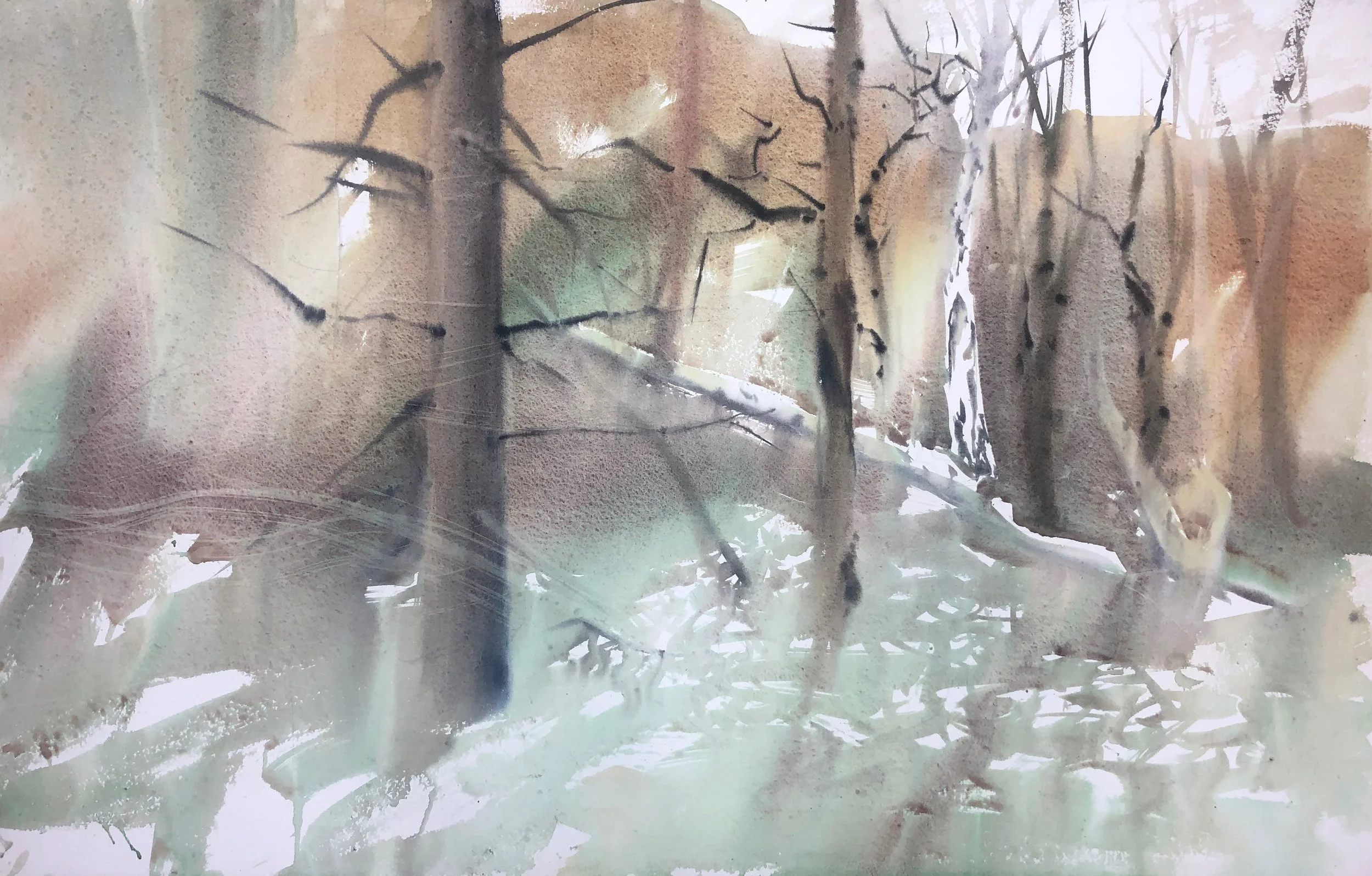
This was a stage of the painting I achieved at the time of seeing this poetic scene described above. I later ruined it by overly defining areas and losing the subtle mystery I felt of this scene.
Trees as Witnesses
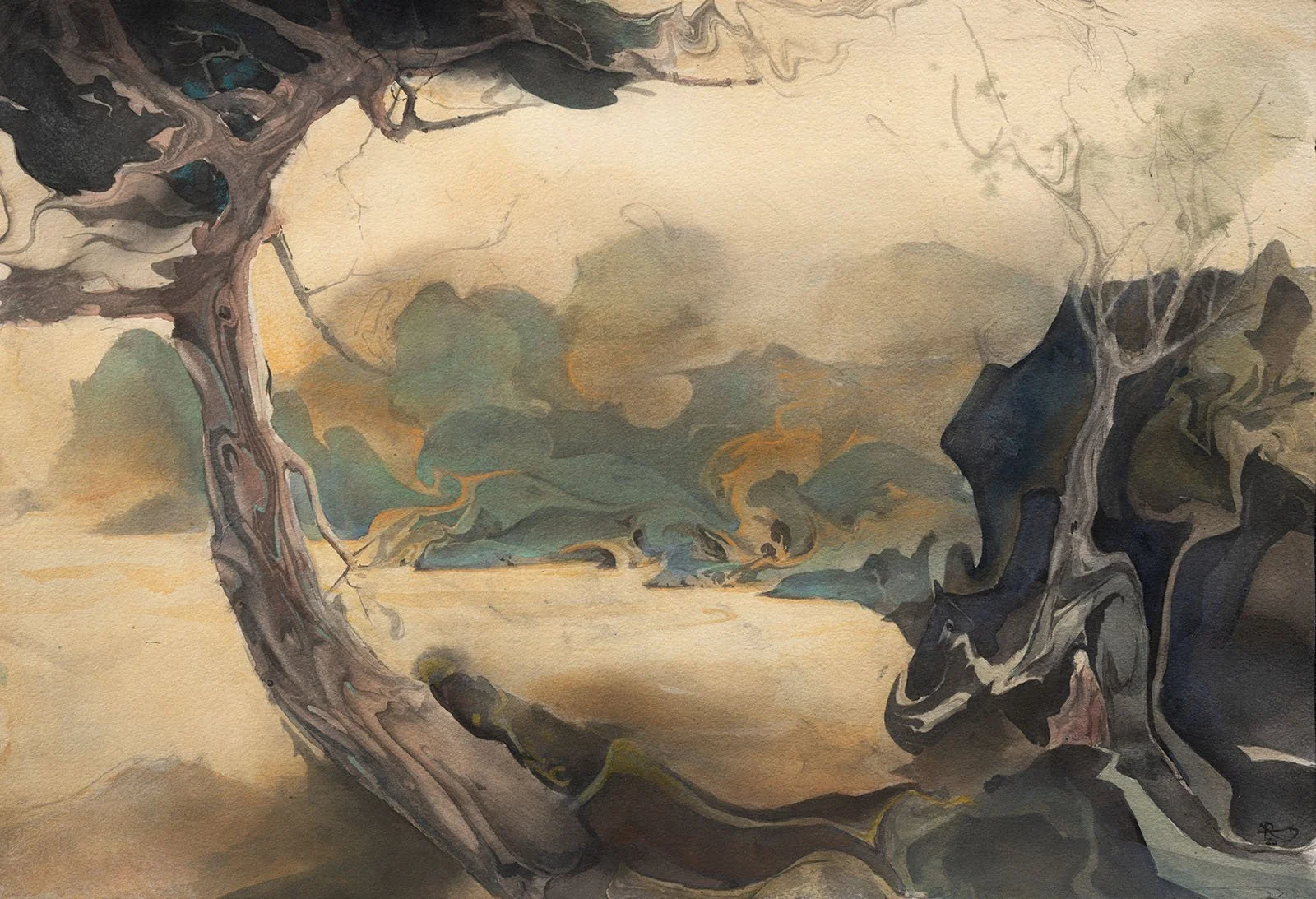
Trees express qualities I find myself drawn towards — a kind of silent, untroubled witnessing. They stand in the middle of everything and remain themselves. I began to wonder what it might mean to bring that quality into my own life, and painting them became a way of trying to imbibe that quality.
I remember once seeing a tree in the Isle of Wight, where I went on a painting trip with my friend. The main trunk of the tree was completely in the dark surrounded by leaves and then a shaft of light shone on it, like a biblical moment and it inspired a sense of hope in me. I've thought about that tree many times since.
Trees as Thresholds
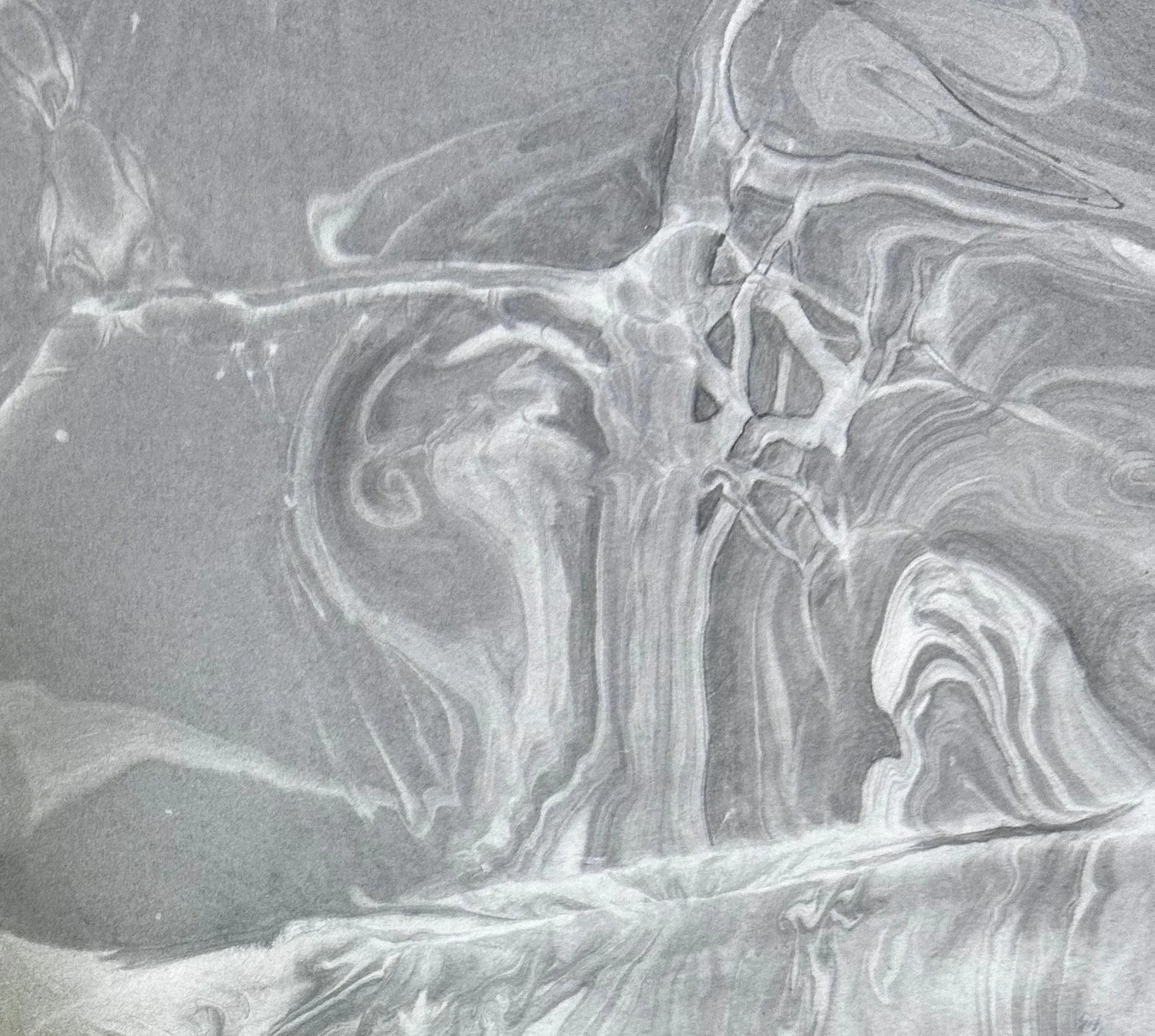
In recent years the trees have begun serving another role. As the paintings move further from direct observation, memory and imagination take on a greater role. The marbled forms often emerge intuitively, revealing shapes and atmospheres I could not have planned. Yet I still need a way into the painting. More often than not, this begins with a tree. The tree provides a place to stand. A point of entry. Once it is there, the rest of the image starts to form itself, it allows me to emotionally relate with the organic mark created by the marbling.